
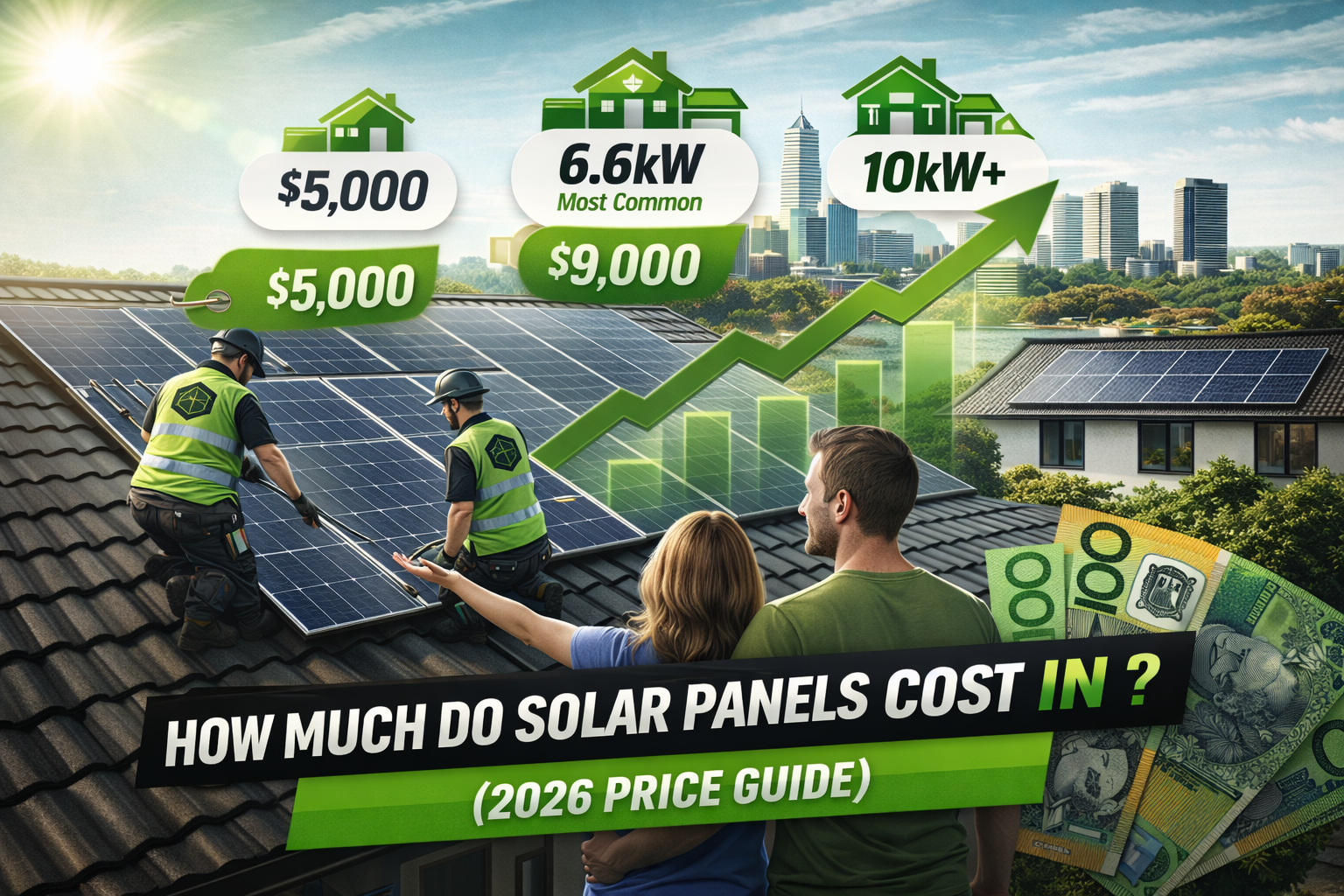
The cost of solar panels in Perth is one of the most common questions homeowners ask — and for good reason.
With electricity prices rising and solar adoption increasing across Western Australia, more people are looking to invest in solar. But pricing can vary significantly depending on the system, installer, and design.
👉 So how much do solar panels actually cost in Perth in 2026?
Average Solar Panel Costs in Perth (2026)
In Perth, the cost of a solar system typically depends on system size and component quality.
Typical Installed Prices:
- 3kW system: $3,500 – $5,000
- 6.6kW system (most common): $5,000 – $9,000
- 10kW system: $8,000 – $14,000
- 13kW+ system: $12,000 – $18,000+
These prices include:
- Solar panels
- Inverter
- Installation
- Standard rebates (STCs)
👉 Pricing is influenced by system quality, installation complexity, and design.
What Affects the Cost of Solar in Perth?
Not all solar systems are equal. Several key factors impact the final price.
1. System Size
Larger systems cost more upfront but typically offer better long-term value due to increased energy production.
👉 Most Perth homes install 6.6kW to 10kW systems.
2. Panel & Inverter Quality
Higher-quality components:
- Last longer
- Perform better in heat
- Have longer warranties
Lower-cost systems often use cheaper inverters — the component most likely to fail.
3. Installation Complexity
Costs can increase depending on:
- Roof type (tile vs metal)
- Roof pitch and accessibility
- Switchboard upgrades
4. System Design (This Is Critical)
This is where most homeowners lose money.
A cheap system with poor design can:
- Underperform
- Reduce savings
- Increase payback time
Research shows that system design and installation quality significantly impact solar performance and long-term efficiency (ScienceDirect 2022).
Government Rebates and Incentives in WA
Solar in Australia is subsidised through the Small-scale Renewable Energy Scheme (STCs).
These rebates:
- Reduce upfront system cost
- Are already included in most advertised prices
In Western Australia, homeowners can also benefit from:
- Feed-in tariffs for exported energy
However, feed-in rates are relatively low, meaning:
👉 Maximising self-consumption is key to savings.
(Clean Energy Council 2023)
How Long Does Solar Take to Pay for Itself?
In Perth, solar typically pays for itself in:
👉 3 to 6 years
This depends on:
- System size
- Energy usage
- Electricity prices
After that:
👉 You’re generating essentially free electricity.
High solar irradiance in WA significantly improves system output and return on investment (Clean Energy Council 2023).
Cheap vs Premium Solar Systems (What’s the Difference?)
Cheap Systems ($4k–$6k)
- Lower upfront cost
- Lower-quality components
- Shorter lifespan
- Higher failure risk
Premium Systems ($8k–$14k+)
- Better performance
- Longer warranties
- Higher efficiency
- Better long-term savings
👉 The cheapest system is rarely the best value.
The Biggest Solar Buying Mistake
The most common mistake Perth homeowners make is:
👉 Choosing based on price instead of system design.
This leads to:
- Underperforming systems
- Lower savings
- Expensive upgrades later
Studies show poor system design reduces output and accelerates degradation over time (ScienceDirect 2022).
How to Get the Best Value Solar System
Instead of comparing quotes blindly, focus on:
- System design tailored to your home
- Quality components
- Installer experience
- Future upgrade compatibility
👉 Solar should be designed as part of a complete home energy system.
Get a Custom Solar System Designed for Your Home
Most companies give you a price.
We give you a plan.
👉 Book Your Free Solar Assessment Today
- Accurate pricing
- Custom system design
- Long-term savings strategy
Final Thoughts
Solar is one of the best investments you can make in Perth — but only if it’s done right.
Understanding the real cost is just the first step.
👉 The real value comes from choosing the right system for your home.
📚 REFERENCES
Clean Energy Council. 2023. Clean Energy Australia Report 2023.
Australian Government. 2023. Small-scale Renewable Energy Scheme (SRES).
Why Choose Us
New Energy Tech Approved Seller
Urban Future is a New Energy Tech Approved Seller, meaning we follow strict consumer protection standards across advice, installation, and support - giving you confidence every step of the way.
Request a Free Quote
Fill in the form and we will be in touch to schedule a booking.

We offer Finance!
Looking to Finance?
urbanfuture has partnered up with Brighte to help our customers find additional payment solutions for their projects.
Brighte’s Green loans offer a 5.89%pa for energy efficient systems, which is applicable on all solar power and hot water systems we offer.
Just let one of our friendly staff members know if you’re looking to finance, and we’ll work with you to find which solution works best for you.